2025 – present
Undergraduate researcherComputer Vision Lab, POSTECH. Advisor: Minsu Cho
Undergraduate researcher, Computer Vision Lab, POSTECH
Pohang, South Korea
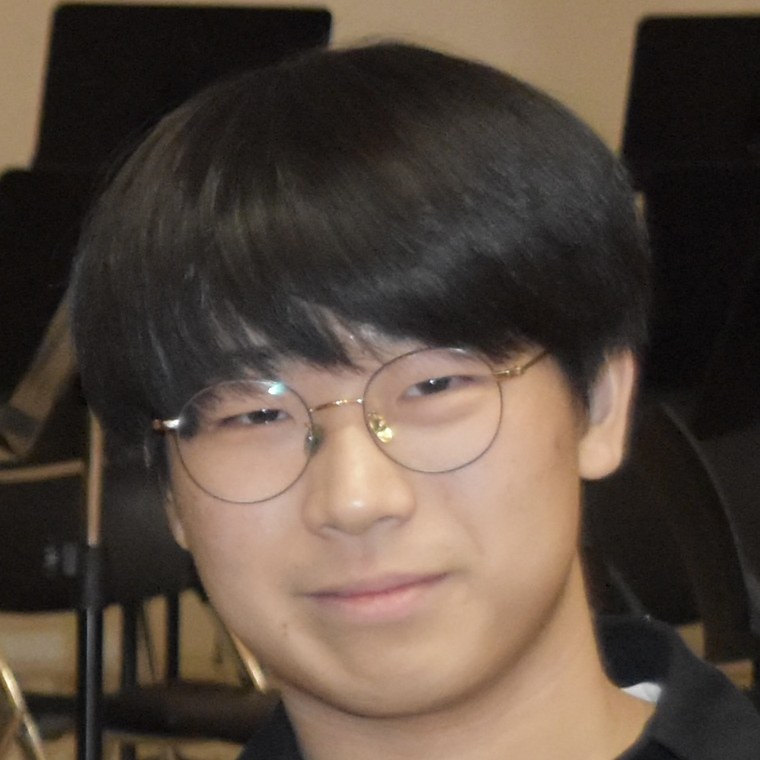
I'm a fourth-year math undergrad at POSTECH and an undergraduate researcher in the Computer Vision Lab, advised by Prof. Minsu Cho.
I want representations of 3D objects that respect the geometry of the object itself. What a model can express should be decided by the shape, not by whatever data it happened to see. Symmetry is a good test of that. If an object has a nontrivial symmetry group there is no single right answer, only an orbit of them, and you can tell in advance whether a representation is able to express it.
I came to vision from pure math, mostly topology and representation theory, and that's still how I read a problem.
I'm also interested in reasoning in foundation models, particularly how reinforcement learning and post-training can improve their reasoning capabilities.
Accepted (Poster) NeurIPS 2026 · To be presented in December 2026
AbstractThe canonical orientation of a 3D object is often not unique but inherently ambiguous: many objects admit multiple equally valid canonical frames that no single-output regressor can faithfully represent. Rotational symmetry is the most structured manifestation of this phenomenon, where the set of valid orientations forms an orbit of the symmetry group. Existing methods fall short in one of three ways: they predict only a single orientation, handle symmetry only under pre-defined group assumptions, or resort to test-time augmentation to approximate the full set of valid orientations. We instead introduce a general framework for ambiguity-aware orientation estimation that is at once SO(3)-equivariant by construction, distributional in its output, and free of any restriction on the symmetry group. It effectively predicts multiple valid orientations as a continuous multi-modal distribution over SO(3) via a truncated Wigner-D expansion, without any symmetry-group assumption. The proposed method outperforms recent equivariant regressors and fixed-quotient classifiers on the ShapeNet orientation benchmark, particularly on categories with continuous rotational symmetry, showing that supervision on discrete symmetry labels generalises to continuous bands.
2025 – present
Undergraduate researcherComputer Vision Lab, POSTECH. Advisor: Minsu Cho
2023 – present
B.S. in MathematicsPOSTECH, Pohang, South Korea
2020 – 2022
Hansung Science High SchoolSeoul, South Korea
2025
Silver PrizeMathematics Competition for University Students in Korea, KMS
2024
Bronze PrizeMathematics Competition for University Students in Korea, KMS